
At times challenging course due to some of the mathematical and computer science content; but also a very insightful discussion of the opportunities and challenges of machine learning applied to a healthcare context
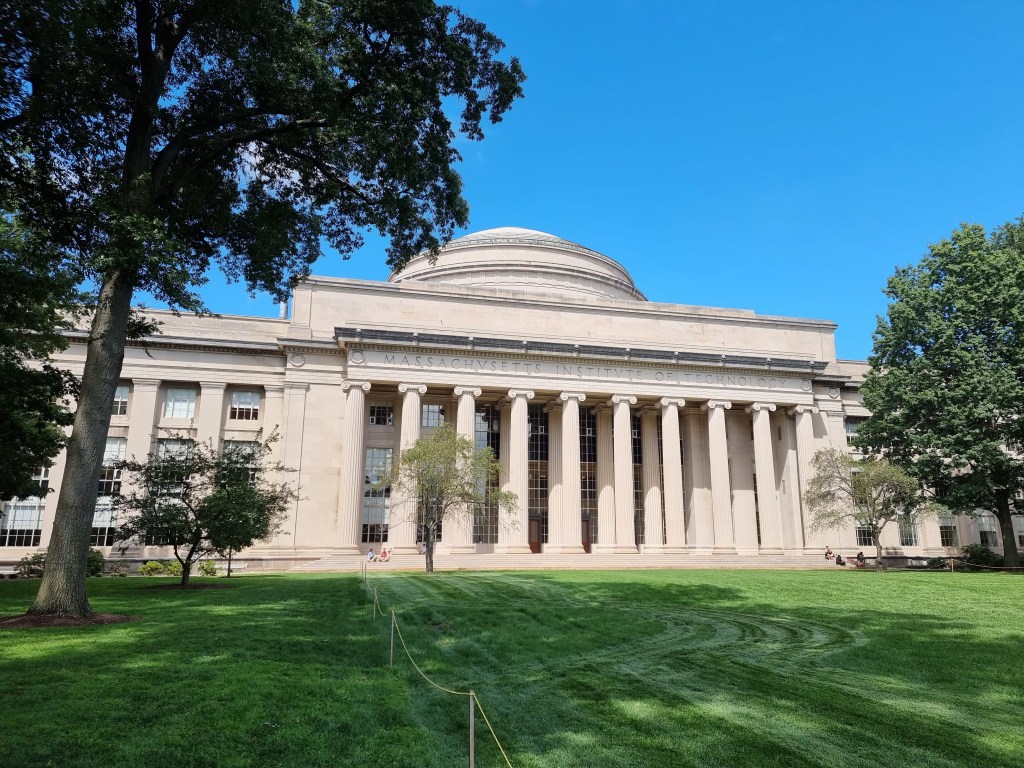
A number of universities have in the past few years started to publish a selection of their course lectures online. Among these, I found a course offered by the elite Massachussetts Institute of Technology (MIT), located in the greater Boston area (USA), on Machine Learning for Healthcare.
References:
Course website: https://ocw.mit.edu/courses/6-s897-machine-learning-for-healthcare-spring-2019/pages/syllabus/
Lecture videos can also be found on YouTube: https://www.youtube.com/playlist?list=PLUl4u3cNGP60B0PQXVQyGNdCyCTDU1Q5j
The MIT OpenCourseWare (OCW) programme has existed in some form for over 20 years, according to https://ocw.mit.edu/about/ and covers a wide range of subjects taught at MIT.
This particular course caught my eye as it combines healthcare with a technology (ML) that is bound to play an ever bigger part in the life of healthcare professionals.
ML is a branch of Artificial Intelligence (AI) – another term that is used widely when discussing the future of healthcare (and indeed most other services).
Specifically, ML is concerned with the creation and development of statistical rules that can learn patterns from ‘training’ sets of data and then provide solutions applied to unseen data sets, without the need for specific instructions. The obvious use case applied to healthcare is the diagnosis and treatment formulation of disease based on a set of input parameters (symptoms, patient vital information, medical history, etc.).
This course’s intended audience is of university level, and therefore I found myself unprepared for much of the material but the general concepts presented are straightforward. Note that much of the data and context is US-based and some of the data sources/motivations are not directly comparable to the UK, e.g. health insurance billing codes and data play a significant part in the classification of patient data.
In the first lecture, Prof. David Sontag begins with a history of ML applied to healthcare, pointing out deficiencies. However, recent breakthroughs in the capabilities of ML, the wide adoption of digital medical records and standard methods to classify medical activities, make ML a more promising proposition for healthcare use cases.
The very nature of healthcare means that ML algorithms, in order to be useful, must be very robust; an erroneous outcome could lead to harm for the patients. Also, even though data standardisation has improved, some level of interpretation of data sets is still required to account for outliers and anomalies, which could skew results.
Prof. Sontag gives three clear examples of how ML can eventually contribute to better healthcare provision:
- Context-driven advice for clinicians, based on extraction of data from patients medical records
- Greater efficiency in manual workflows, e.g. computational image processing of scans
- Analysis of medical data at scale
The second lecture is provided by Prof. Peter Szolovits and is a great introduction to the goals and phases of health care.
Statistics provide a view of how likely one is to live longer or succumb to a particular disease, based on age, ethnic origin, gender, etc. Life expectancy is good indicator but equally important is the quality of life as we get older. Prof. Szolovits introduces the concepts of morbidity and disability. A philisophical question would be the trade off between longer life or lower levels of morbidity.
The traditional tasks of medicine are diagnosis, prognosis and therapy.
The pre-requisite to this is data, which can be gathered in a number of ways (e.g. observation, monitoring, laboratory test results), and the information phase whereby the data is interpreted, corrected and filtered.
Data collection and standardisation techniques are discussed. It seems to me that better data leads to better decisions and this cycle repeats itself.
The importance of understanding clinical data is further explored in a deep dive by Prod. Szolovits in a subsequent lecture.
The course contains 25 lectures so I can’t summarise all the content due to the volume of information. I particularly enjoyed the material about natural language processing – computationally making sense of textual data and extracting useful information based on context – and also the interpretation of medical imaging data, e.g. in the context of cardiology.
I thought that both professors and guests were well prepared and very clear in their presentations. I think these free online resources are a true gift by MIT and I will revisit them in future.

 Meddie
Leave a comment